Showing posts with label Interviews. Show all posts

Tuesday, June 5, 2018

Baadur Jobava on chess training

Read the full interview here

Question: So you think that a player can improve only by doing what you have suggested above? Don’t you think that a coach is essential?

Jobava's answer: Books are your coach. Botvinnik is your coach. Alekhine is your coach. Having a trainer is good but not everyone can afford it. So many books are available out there, and if you are ready to use your brain then you can learn from them. Coaches will teach you from those very books and charge you money for it. Why do you want to do that? 

Wednesday, November 2, 2016

Una intervista al Maestro Fide Loris Cereda (italian version)

La maggior parte dei giocatori agonistici di scacchi,  vorrebbe migliorare il proprio rating scacchistico. Statisticamente la crescita in termini di punteggio elo, avviene più spesso nei giocatori giovani. I giocatori più maturi hanno difficoltà a migliorare. Oggi vogliamo raccontarvi una storia straordinaria. E’ relativa alla recente nomina a Maestro Fide di Loris Cereda.
E perché questa storia merita di essere raccontata?
Loris Cereda ha 54 anni. Secondo il database della Federazione Scacchistica Italiana, la sua performance elo storica è la seguente:
 ·       Tra il 2002 e l'inizio del 2004, Loris ha avuto un rating elo nazionale  inferiore a 2000.
·       Nel 2004 (42 anni) ha ottenuto il rating Fide di 2007 punti;
·       Ha superato i  2100 punti elo nel marzo 2011 (ciò significa che ci sono voluti circa 7 anni per guadagnare 130 punti elo);
·       Da marzo 2011 a dicembre 2013 il suo rating ha oscillato tra 2.137 e 2.160 punti elo, con un picco di 2242 nel 2012.
  • Loris non ha partecipato a tornei nei primi 11 mesi dell'anno 2013. Un breve riassunto di ciò che è accaduto in quel periodo, può essere letto in un post precedente.
  • Nel dicembre 2013 ha ricominciato a giocare e a gennaio 2016  ha guadagnato 141 punti elo conseguendo anche il titolo di Maestro Fide all'età di 53 anni.


Poiché ci domandavamo quali fossero le azioni specifiche che Loris ha messo in pratica al fine di migliorare e ottenere il titolo di FM, abbiamo deciso di chiederglielo...

Domanda: Loris, prima di tutto vogliamo esprimere le nostre felicitazioni per il titolo di Maestro Fide ottenuto quest'anno. La storia di un uomo di mezza età che migliora e ottiene il titolo di FM, all'età di 53 è un messaggio di speranza e di ispirazione scacchistica per tutti i numerosi giocatori di scacchi, di età compresa tra i 40 e i 55 anni che sono bloccati nella loro crescita scacchistica. Vuoi condividere con noi i segreti di questa storia di successo?

Risposta: Beh, lasciami dire che io considero la forza scacchistica in funzione di tre fattori principali:
1) la cultura scacchistica;
2) la pratica
3) predisposizione mentale e dedizione per i risultati.
Ho costruito la maggior parte della mia cultura scacchistica negli anni giovanili, poi, dopo un lungo periodo lontano dagli scacchi agonistici, ho deciso di migliorare dandomi l’obiettivo di diventare Maestro della FSI. Ho preso alcune lezioni per mettere a punto la mia cultura scacchistica, soprattutto ho elaborato un nuovo repertorio di aperture, ho lavorato sulla comprensione delle strutture pedonali (lo sforzo maggiore è stato dedicato alle strutture che hanno il pedone d isolato), ho meglio interiorizzato i finali di base. Poi ho dedicato 2 ore al giorno nella pratica della tattica. Infine mi sono immerso in profondità nella mia mente, per scoprire i collegamenti mancanti, che spesso hanno messo a repentaglio la mia comprensione degli scacchi. Il programma ha richiesto 1 anno e mezzo per portare i primi risultati concreti poi, ovviamente, ho avuto un po’  di alti e bassi a causa di vari motivi, tra i quali il fatto che un giocatore non professionista non può sempre essere debitamente preparato. Il passo finale che mi ha portato al titolo di Maestro Fide è stato drammaticamente sospinto dalla mia "brutta avventura" con la storia assurda di avere barato a scacchi. Questo avvenimento mi ha dato una motivazione straordinaria per dimostrare che tutte quelle storie erano ridicole.

Domanda: Hai fatto davvero un lavoro serio! E merita il nostro rispetto e apprezzamento. Hai dimostrato vera determinazione e forza di volontà. Potresti approfondire il concetto che hai esposto relativo a trovare " i collegamenti mancanti che spesso hanno messo a repentaglio la mia comprensione degli scacchi "?

Risposta: In realtà non è così facile sintetizzare l'intero concetto in una risposta. Ok, lasciami dire che è qualcosa di simile alla ricerca in quello che Ludwig Wittgenstein chiama "Crick mentali". Consentimi di fare un esempio: hai notato una ragazza. Ti sembra così affascinante. Un tuo amico ti dice che lei non sembra affatto affascinante. In realtà lei non è proprio affascinante, semplicemente per alcuni aspetti, come ad esempio una camicia, ti ricorda il tuo grande amore del passato. Quindi, si dimentica l’oggettività nel guardare la realtà.
Ok, accade più volte mentre si gioca a scacchi, quando il cervello computazionale è soffocato dalla "memoria" e la tua analisi perde la connessione con la posizione reale.

Domanda: Adesso capisco il punto. C'è un libro che ritieni ti abbia aperto gli occhi? Ossia un libro che ti ha veramente aiutato a migliorare la comprensione degli scacchi?

Risposta: Beh, ci sono un sacco di libri che parlano di scacchi e della mente. Penso che quello che mi ha dato il sostegno maggiore sia "Chess Master at any age” di Rolf Wetzell

Domanda: Quali sono i tuoi progetti scacchistici per il futuro?

Risposta: Dipende dalla mia attività professionale. Ipotizzando di avere a disposizione una quantità accettabile di tempo, innanzi tutto intendo  consolidare il mio rating oltre 2300. Poi preparerò un attacco alla prima norma di Maestro Internazionale. Ho provato lo scorso dicembre, ma non ci sono riuscito anche se ero davvero in ottima forma, quindi ho bisogno di preparare qualcosa di diverso. Nel caso riesca a raggiungere questa prima norma, mi muoverò passo dopo passo per cercare di ottenere il livello di 2400 e il titolo di Maestro Internazionale. Potrebbe richiedere  4/6 anni. Potrei arrivarci a 60 anni e ci incontreremo di nuovo.

Domanda: A gennaio e febbraio 2017 hai pianificato di presentare tre conferenze a Milano (Italia) c/o Mimosa Internazionale Horizon. In quell'occasione tratterai più in dettaglio alcuni degli argomenti che abbiamo discusso in questa breve intervista?

Risposta: Sì, certo, in particolare il concetto di link mancante.

Domanda: Quale consiglio daresti a un giocatore/giocatrice di scacchi di seconda o prima categoria di mezza età, che vorrebbe migliorare il suo punteggio elo?

Risposta: Innanzi tutto guardare in profondità dentro se’ stesso, i difetti del suo carattere, non solo nel gioco degli scacchi. Poi fare una analisi psicologica dei suoi errori. Voglio dire cercare di capire, laddove non si tratti di carente cultura scacchistica, perché non ha giocato la mossa che avrebbe potuto giocare facilmente. Fare un elenco delle cause psicologiche e creare un database delle sue "cause degli errori".
Poi suppongo che un giocatore di prima o seconda categoria abbia bisogno di migliorare la cultura scacchistica, in particolar modo nei finali. Infine fare un sacco di esercizi tattici.

Domanda: C’è una partita che illustra il tuo stile scacchistico oppure la tua partita migliore finora, come preferisci?

Risposta: Sono estremamente orgoglioso della mia partita con il Maestro Internazionale Fabrizio Bellia, Novara 2011. La sua cultura scacchistica superiore mi ha distrutto con un meraviglioso sacrificio strategico. Però non ho mai mollato e in uno zeitnot folle ho trovato (con un po’ di fortuna) una spettacolare combinazione di patta. Si può trovare in  vari database gratuiti.

Commento dell’intervistatore: Grazie per il tuo tempo, per l'ispirazione che ci hai offerto e buona fortuna per il futuro scacchistico.

Risposta: Grazie a te ... rimani sintonizzato.

Tuesday, November 1, 2016

An interview to Fide Master Loris Cereda

The most of the tournament chess players would like to improve his/her chess ratings. But statistically the elo growth happens most often in young players. Older players find it difficult to improve. Today we want to tell you an extraordinary story. It’s about a newly appointed Italian Fide Master Loris Cereda.
And why is this story worthy to be told?
Loris Cereda is 54 years old now. According to the italian Chess Federation Database his historical elo performance is as follows:

  •  Between the year 2002 and the beginning of the year 2004, Loris had a national elo rating below 2000.
  •  In the year 2004 (age 42) he obtained a Fide Rating of 2007;
  •  He was able to exceed 2100 elo rating in the March 2011 (that means it took about 7 years to gain 130 elo points) ;
  •  From March 2011 to Dec. 2013 his rating fluctuated between 2137 and 2160 with a peak 2242 rating in 2012.
  •  No active chess for Loris for the first 11 months of the year 2013. A brief synopsis of what happened in that period can be read in a previous post.
  •  Then from December 2013 to January 2016 he started to play again and gained 141 elo points and obtained the FM title at the age of 53.

So, we wonder about the specific actions that Loris has put in practice in order to improve and obtain the FM title. We have decided to ask him…J

Question: Loris, first of all we want to express our felicitations for the FM title you obtained this year. The story of a middle age man who improves to obtain the FM title at the age of 53  is a message of chess hope and inspiration for all the many chess players, aged between 40 and 55 who are somewhat stuck in their chess growth. Do you want to share with us the secrets of this success story?

Answer: Well, let me say that I consider chess strongness as a function of three major factors:
1) Chess culture
2) Practise
3) Mental set up and commitment to results.
I built up the larger part of my chess culture in the young years, then, after a long period far from serious chess, I decided to improve targeting Italian Master level as my goal. I took some lessons to fine tune my chess culture, mainly setting up a new opening repertoire, understanding pawns structures (the highest effort was put on the d-isolated pawn ones), I better interiorized basic end games. Then I devoted 2 hours per day in practicing chess tactics. Finally I went deep into my mind to discover the missing links which were often jeopardizing my chess understanding. The program took 1 year and a half to present the first concrete results, then obviously I had some up and down due to various reasons including that a non professional player cannot always be duly prepared. The final step up to FM was dramatically forced by my “bad adventure” with the crazy cheating story, this fact gave me an extraordinary motivation to demonstrate that those all stories were ridiculous.

Question: Well, that’s quite a serious work! And it deserves our respect and appreciation. You showed real determination and will power as well. Could you elaborate a bit more about the way you found “the missing links which often jeopardized your chess understanding”?  

Answer: Actually it is not so easy to squeeze the entire concept in an answer, ok, let me say that is something like looking into what Ludwig Wittgenstein called “mental cricks”. Let me make you an example, you noted a girl, she appears you so fascinating, a friend of you says that she doesn’t appear fascinating at all, in reality she isn’t fascinating at all, she simply reminds you, for some characteristics, it might be just a shirt, your past great love. So, you miss objectiveness in looking at reality.
Ok, it happens several time in playing chess, when your computational brain is choked by your “memory” and your analysis miss the link with the real position.

Question: I understand your point now. Is there a  book that you consider an eye opener? I mean a book that really helped you to improve your chess understanding?

Answer: Well, there are a lot of books talking about chess and mind, I think that the one which gave me the larger support is “Chess Master at Any Age” by Rolf Wetzell

Question: What are your chess plans for the future?

Answer: It depends by my own professional activity. Assuming an acceptable amount of time I will first consolidate my rate over 2300, then I will prepare an attack to the first IM norm. I tried it last December but failed and I was really in an excellent shape, so I need to prepare something else. In case I will be able to reach this first norm, then I will go on step by step trying to get the 2400 level and the IM title, it could take 4/6 years, might be at 60 and we will meet again.

Question: In January and February 2017 you have planned to present three lectures in Milan (Italy) c/o Mimosa International Horizon. On that occasion, are you dealing more in detail some of the subjects we discussed in this brief interview?
 
Answer: Yes, of course, especially the missing links concept.

Question: Which suggestion would you give to the 2nd/1st category middle age chess player who would like to improve his/her chess rating?

Answer: As a first to look deeply into himself, the bugs of his character not only in chess. Then a psycho analysis of his mistakes. I mean, trying to understand, wherever it is not a missing chess culture, why he didn’t play the move that he could easily play. Make a list of the psycho reasons and create a database of his “mistakes origin”.
Then I assume that a 2nd/1st category need also to improve chess culture, especially in end games.
Finally a lot of tactical exercises.

Question: Can you show us a game that illustrates your chess style, or your best game so far, as you prefer?

Answer: I am extremely proud about my game with IM Fabrizio Bellia, Novara 2011. His superior chess culture destroy me with a wonderful strategic sacrifice. Then I never gave up and in a crazy zeitnot I found (a little bit lucky) a spectacular draw combination. It is freely available on several database.

Interviewer comment: Thank you for your time and for the inspiration you offered us and good luck for your chess.
Answer: Thank you to you… stay tuned.

Thursday, October 3, 2013

Tuesday, April 17, 2012

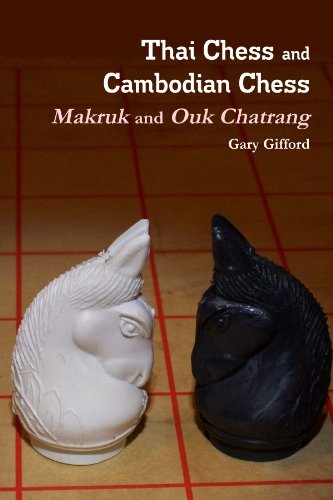
Thai Chess and Cambodian Chess: An interview to Gary K. Gifford

Here you can see a picture of Gary K. Gifford with Makruk pieces that he made from beads. 
(Courtesy of Rosa Gifford)


Gary K. Gifford is a personal friend, UON Editor, the author of  The Bermuda Pie-Angle, Cartoons & Word Play and the author of  The Cosmic Submarine, an in- progress space opera.


                   “Temple on an Asteroid” by G. K. Gifford (c) 2007

When I realized he published a book on chess variants, I wanted to interview him for the blog. What follows is a Q&A session taken from a series of e-mail correspondence.

Q: When did your interest in chess variants start and how did it happen?

A: When I was in about eleventh grade (back in 1973)  I was a member of the high school chess club and I was once asked to referee a game of Kriegsspiel which fascinated me. But I never played the game. During that same era my parents bought a game called Feudal (which I still have)... and I enjoyed that a lot... even played it a few months ago at work with my boss.  So Feudal (made by the now defunct 3M Game Company) was the first variant that grabbed my attention.  Then in college there was Double-Bughouse (or Bughouse), where you have a partner, 2 chess boards, and your captured pieces go to your partner and visa versa.... and you can drop those on the board instead of moving one of your original pieces.  At some point I acquired a copy of Wayne Schmittberger's "New Rules for Classic Games."  That lead to me purchasing a Shogi set (Japanese Chess).  And I bumped into a man from Vietnam who taught Xianqi (Chinese Chess) to me. I really got into those two games.  By coincidence, a co-worker who was (is) a member of MENSA had also acquired Shogi and Xianqi and an intern from Vietnam arrived and soon we had a lot of Shogi and Xianqi going on.  I invented my own variant (Pillars of Medusa) as a game to be used in a [yet to be published] novel I wrote. I told a fellow game player about it and he suggested that I send it to the ChessVariants web site.  I did, and they helped me to get it on their site so it could be played on-line.  Later a software programmer created a Zillions of Games application hat allows a computer to play it.... anyway, I've probably rambled on a bit too much... but to add just a little more... I ended up creating about 56 chess variants, won two chess variants tournaments, and wrote a book about Makruk and Ouk Chatrang (Thai and Cambodian Chess).  I wrote the book because I went to buy a book on those variants and could find none... and I thought those games deserved to have a book. 

Q: Are Thai & Cambodian Chess more strategical games or does tactic prevail? 

A: There are tactics, of course... you have knight forks like in chess... and the King plus Rook mates will look the same.  But the Bishops move only one space diagonal or one space forward.  And the Queen moves only one space diagonally.  The King is a tough player in these games.   Pawns start on the third row and when they reach your opponents third row they turn into the weak Queens.  So, Tactics - Rook and Knight type tactics will be as in chess.  But with the short range Bishop and Short Range color-restricted Queens there is a whole new world of tactics.  And, of course, with only one long range piece (the rook) and the other factors briefly discussed, you can imagine (with little effort) that strategy must be very different than in chess.  One thing interesting is that you can pretty much play whatever opening moves you want, regardless of whether you have white or black.  This is possible due to the short ranges of the pieces (except rooks, as mentioned).  In the end phase of the game you can say that tactics are critical... because unlike chess, depending on the material you have you must deliver mate in a given number of moves...otherwise the game is drawn.  So, you must get your technique down,,, a wasted move can force a draw... in chess you can dilly dally if you have a big advantage against a lone king... not true in Makruk or Ouk Chatrang.  Note: Former World Chess Champion Kramnik played a game of Makruk.  He won... and he indicated that he liked the game and that it reminded him of endgame play.... which reminds me... Tempo is extremely important in these games.  You will really learn to appreciate Tempo. 

Q: If we consider an average amateur chess player, I mean someone rated around 1400, how long would it take to learn playing Thai & Cambodian Chess? 

A: Chess players can pretty much sit at the board and play these games within minutes.  They are extremely easy for chess players to learn. 

Q: If I learn to play Thai & Cambodian Chess, where can I play online chess? A: You can play at these sites, and possibly others: -  www.chessvariants.org   -  good for slow correspondence -  http://www.playok.com/en/makruk/    -  great for real time -   http://www.schemingmind.com   -  good for slow correspondence Is there a way to play against an engine?  Zillions of Games has Makruk There is a free application called "Peace Thai Chess Master" - If you download it be sure to do so from a trusted website... like ones with the Green WOT (Web of Trust) symbol. 

Q: Where can one purchase your book on Thai & Cambodian Chess? 

A: Thai Chess & Cambodian Chess (Makruk & Ouk Chatrang)  can be found at:  -   www.Amazon.com     www.Lulu.com     there is also an ouk.asia site... but I don't know much about that site and I only found out today that they list my book 

 Q: Are you still planning to publish more books on chess related subjects? 

A: I have a slight urge to write two more books on the topic of games (chess variants) and possibly a few chess books.  But at the moment I am wrapping up a novel, then there is a submarine book, and also a fantasy art book.... so it may be a while before another game book surfaces. 
********************************
Well, I thank Gary for his answers and I wish him good luck for all these works in progress.
In closing here is a Makruk “mate-in-3” from one of Gary Gifford's games. We thank him for sharing it.